

Why Is My AC Blowing Warm Air? A Lake St. Louis Homeowner's Guide
Dan Walsh • July 2, 2026

It's the middle of July in Lake St. Louis, MO — temps in the 90s, humidity hanging heavy — and your air conditioner is blowing air that feels warm or barely cool. Few things feel more urgent on a hot summer day. The good news: most causes of an AC blowing warm air are diagnosable and fixable. Here's how to think through it.

Start Here: The Quick Checks

Before calling for service, work through these quick checks — they resolve the issue more often than you'd think:

Check the thermostat. Is it set to COOL, not HEAT? Is the temperature set lower than the current room temperature? If the fan is set to ON rather than AUTO, the system will blow air even when it's not in a cooling cycle — and that air will feel room temperature or warm.

Check your air filter. A severely clogged filter restricts airflow so dramatically that the system can't function. If the filter is visibly grey and matted with debris, replace it immediately, then give the system 15–20 minutes to restart properly.

Check the circuit breaker. AC systems have two components: the indoor air handler and the outdoor condenser. If the outdoor unit's breaker tripped, the indoor fan will still run (blowing uncooled air) while the compressor is off. Check your electrical panel for a tripped breaker labeled "AC," "Condenser," or "Compressor."

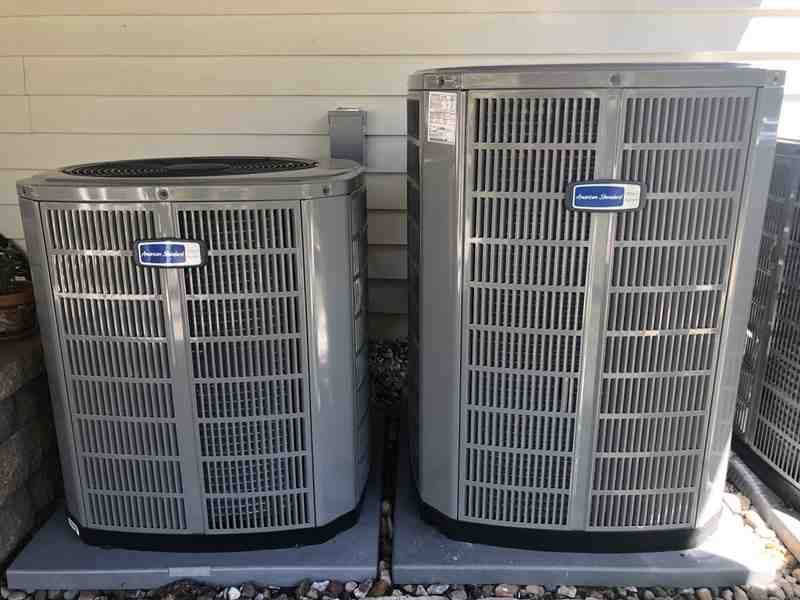
Check the outdoor unit. Go outside and look at the condenser. Is it running? Is it covered in ice? Is there at least 2 feet of clear space around it? A unit that's shut off, frozen, or obstructed can't cool anything.

The Most Common Causes of Warm Air from Your AC

Low refrigerant (refrigerant leak). Refrigerant is the substance that absorbs heat from your home's air and releases it outdoors. When refrigerant is low due to a leak, the system loses its ability to cool effectively. You can't "top off" refrigerant like motor oil — it has to be recharged after the leak is found and repaired. Signs: weak or warm air, hissing sounds near the unit, ice forming on the refrigerant lines.

Frozen evaporator coil. When airflow is restricted (dirty filter, closed vents) or refrigerant is low, the evaporator coil can ice over. A frozen coil blocks the heat exchange process entirely and results in warm air — or no airflow at all. The fix: shut the AC off, run just the fan to thaw the coil, and address the underlying cause.

Dirty condenser coils. The outdoor condenser unit releases the heat your system pulled out of your home. If the condenser fins are packed with dirt, grass clippings, or debris from Lake St. Louis's summer storms, the heat can't escape efficiently. The system struggles and eventually blows warmer air. Annual coil cleaning as part of a tune-up prevents this.

Compressor failure. The compressor is the heart of the AC system — it pressurizes the refrigerant and drives the cooling cycle. A compressor that's failing or seized will result in air that blows, but doesn't cool. This is the most expensive repair scenario and often triggers a conversation about replacement.

Ductwork leaks. If cooled air is escaping through gaps or disconnected sections of ductwork in your attic or crawl space before it reaches your living areas, you'll get weak or warm airflow at the registers. Lake St. Louis homes with older duct systems sometimes develop significant leakage over time.

"AAA saved the day! My AC broke in this St. Louis heat. After another company told me two to five days they would get the part, AAA came out and had us running fast."
— Amy G., St. Louis, MO

Should I Run the AC While Warm Air Is Coming Out?

It depends. If the cause is something simple (wrong thermostat setting, tripped breaker), yes — fix it and run normally. If you see ice on the lines or outdoor unit, shut it off immediately and let it thaw — running a frozen system can damage the compressor. If you hear unusual sounds (hissing, grinding, banging), shut it down and call a technician.

FAQ: AC Blowing Warm Air in Lake St. Louis, MO

Why is my AC running but not cooling the house?
The most common reasons are low refrigerant, a frozen evaporator coil, a dirty condenser, or a failing compressor. Check your filter and thermostat first, then check whether the outdoor condenser unit is running. If neither solves it, call for AC service.

How do I know if my AC is low on refrigerant?
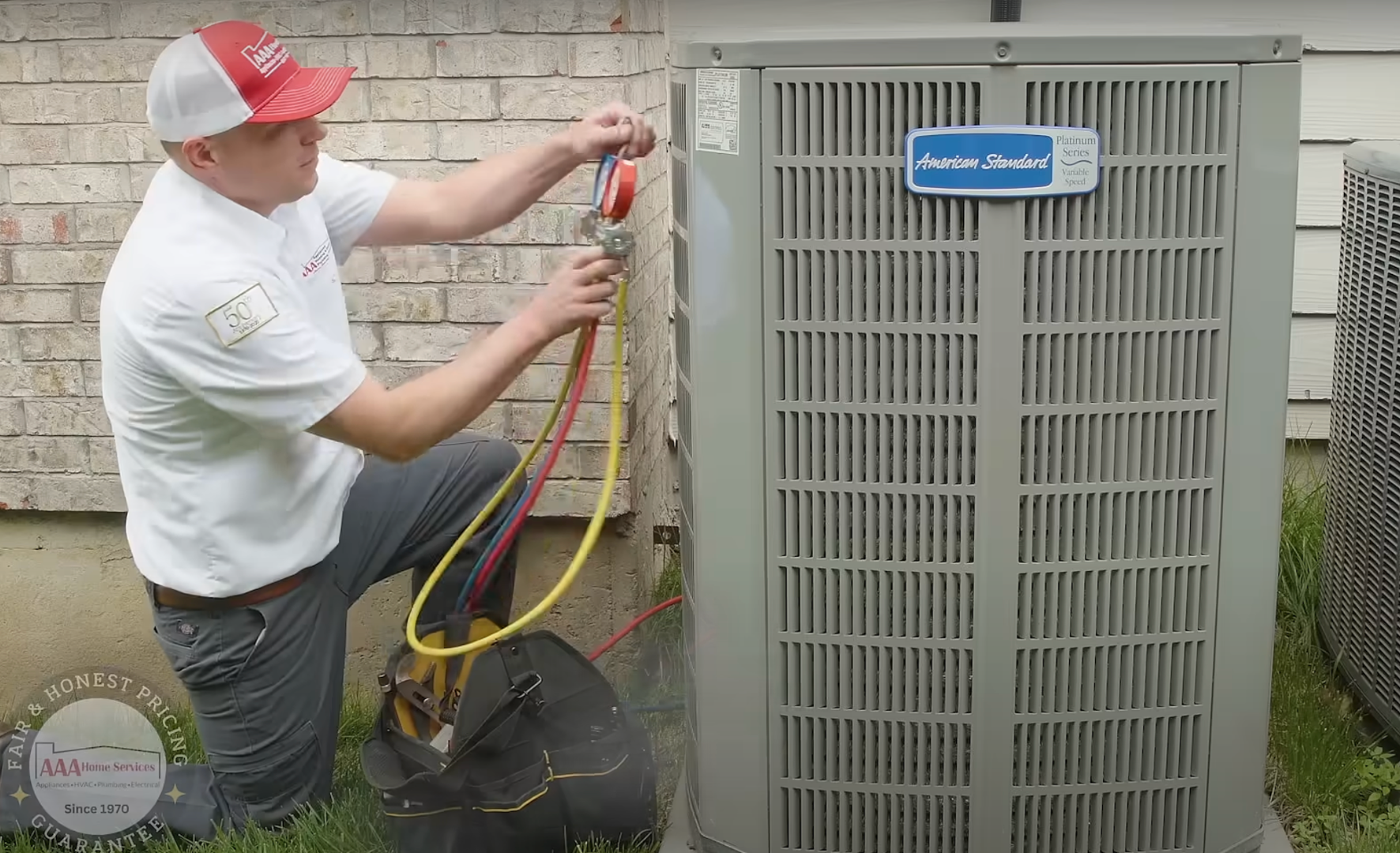
Signs include warm or weak airflow, ice forming on the refrigerant line near the indoor unit, a hissing or bubbling sound, and electricity bills that seem higher than usual as the system runs longer to try to cool the home. A technician can check refrigerant pressure with gauges.

Can I recharge AC refrigerant myself?
No. Handling refrigerants requires EPA 608 certification in Missouri. The more important issue is that refrigerant doesn't deplete on its own — if it's low, there's a leak that must be repaired first, or you'll just lose the refrigerant again.

What does a frozen evaporator coil look like?
You'll likely see ice on the copper refrigerant line running from the outdoor unit into the home, or visible ice on the indoor air handler's coil if you can access it. Sometimes the ice blocks the filter housing too.

How often should I have AC service done in Lake St. Louis?
Annual AC service — typically in spring before the heat season — keeps the system running efficiently and catches small issues before they become expensive ones. See our AC maintenance tune-up page for what's included.

Get Your AC Running Again in Lake St. Louis, MO

AAA Home Services provides air conditioning repair and service throughout Lake St. Louis, MO and the surrounding area. Whether it's a refrigerant leak, a frozen coil, or a failing compressor, our HVAC technicians diagnose the real problem and give you an honest answer about the best path forward.

Request AC service today — we serve Lake St. Louis and all of St. Charles County, including Saint Charles, O'Fallon, and Cottleville. Our Fair & Honest Pricing Guarantee means you'll know exactly what you're paying before any work begins.

By Dan Walsh July 2, 2026
Dealing with low water pressure in Wentzville, MO? Learn the common causes, what you can check yourself, and when to call a plumber for a lasting fix.
By Dan Walsh July 2, 2026
Water heater lifespan in Saint Charles MO — how long they last, signs it's failing, and when repair vs. replacement makes sense.
By Dan Walsh July 2, 2026
Whole home surge protection for your Lake St. Louis home — what it costs, what it covers, and why a standard power strip isn't enough.
By Dan Walsh July 2, 2026
Considering air duct cleaning in Saint Charles MO? Learn what it actually does for your air quality, when it's worth it, and what to watch out for.
Show More