
Don’t Get Into Hot Water by Messing Up Your Water Heater Settings
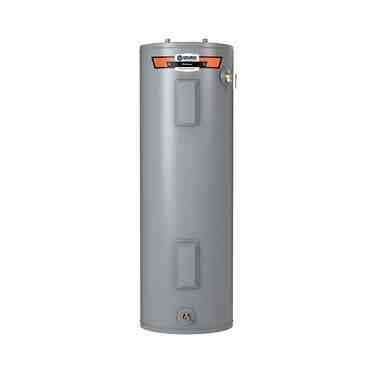
Is Your Water Heater Set to the Right Temperature?
Changing the temperature on a water heater is one of the simplest ways to improve your home’s safety and cut your energy bill at the same time.
Here’s the quick answer most homeowners need:
| Step | What To Do |
|---|---|
| 1 | Set your water heater to 120°F — the setting recommended by the U.S. Department of Energy |
| 2 | For gas heaters , turn the dial on the gas control valve near the bottom of the unit |
| 3 | For electric heaters , turn off the breaker, remove the access panel, and adjust the thermostat dial(s) |
| 4 | For tankless models , use the digital display or buttons to set your temperature |
| 5 | Wait 1–3 hours , then test the water at a faucet with a thermometer |
Water heating accounts for around 18% of the average American home’s energy use . A small dial adjustment can save you real money — and protect your family from scalding hot water at the same time.
I’m Dan Walsh , and with years of experience overseeing plumbing and home repair services across the Greater St. Louis area, I’ve seen how something as simple as changing the temperature on a water heater can make a big difference in both safety and efficiency. In the sections below, I’ll walk you through everything you need to know to do it right.
Changing the temperature on a water heater word list:
The Risks and Rewards of Changing the Temperature on a Water Heater
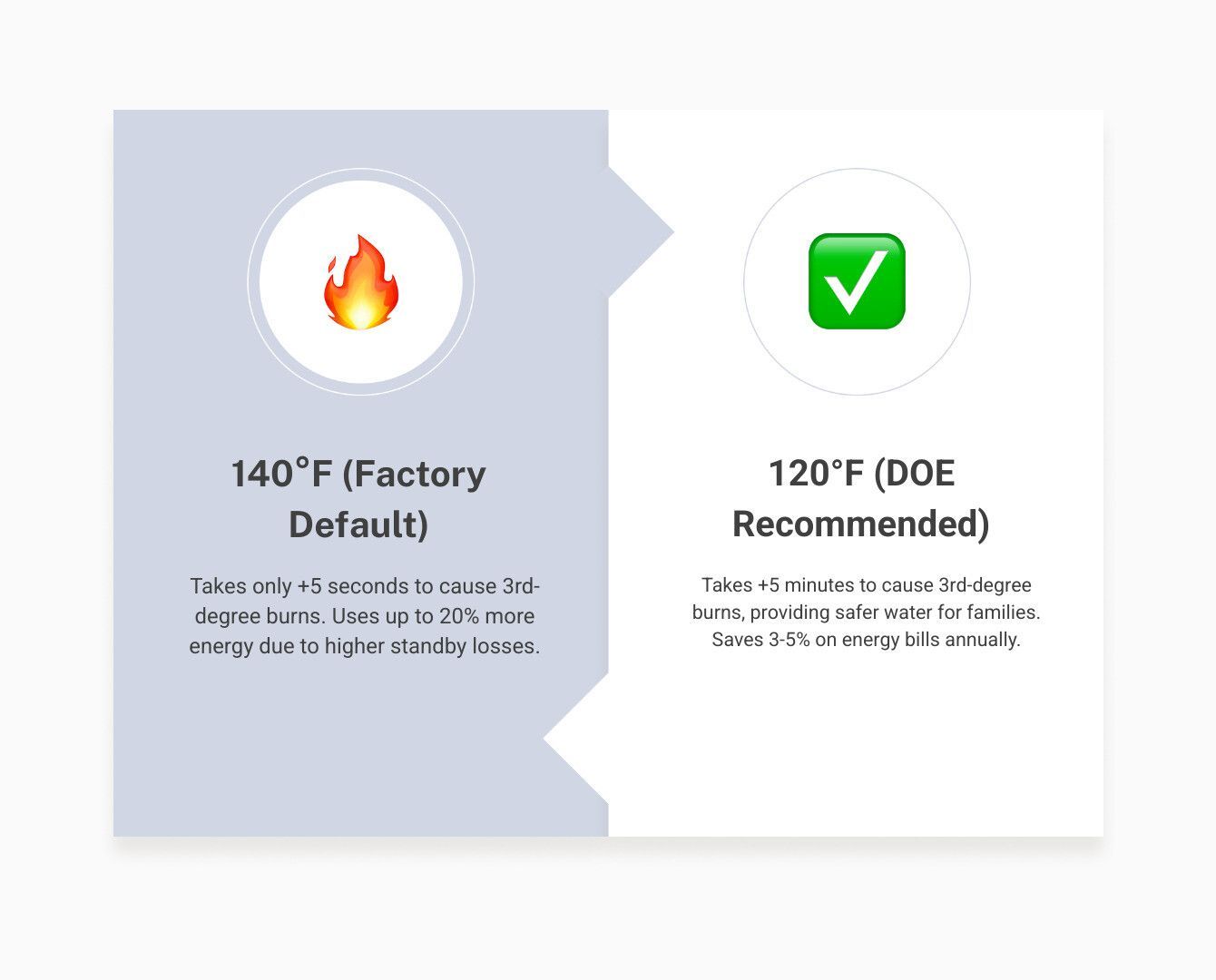
When we talk to homeowners in St. Louis or St. Charles, we often find that their water heaters are still set to the factory default of 140°F. While that might sound like it guarantees a nice hot shower, it actually introduces several risks that most families would prefer to avoid.
The primary reward for changing the temperature on a water heater down to a more reasonable level is safety. According to the Consumer Product Safety Commission, tap water scald burns result in more than 1,500 hospital admissions and 100 deaths per year in the US. By lowering the setting, you significantly reduce the risk of accidental burns, especially for children and the elderly whose skin may be more sensitive.
Beyond safety, there is the financial benefit. Every 10°F reduction in water temperature can save you 3% to 5% on your water heating costs. This happens because you are reducing “standby heat loss”—the energy wasted as heat escapes from the tank into the surrounding air while the water is just sitting there waiting to be used. Keeping your system optimized is a key part of water heater maintenance.
Balancing Safety and Efficiency at 120°F
For the vast majority of households in our service area, from O’Fallon to Chesterfield, 120°F is the “Goldilocks” setting. It is hot enough to kill most harmful bacteria and provide comfortable showers, but cool enough to prevent instant injury.
Consider the dramatic difference in burn times provided by the U.S. Department of Energy:
| Temperature | Time to Produce a Serious Burn |
|---|---|
| 150°F | About 1.5 seconds |
| 140°F | Less than 5 seconds |
| 130°F | About 30 seconds |
| 120°F | More than 5 minutes |
As you can see, changing the temperature on a water heater from 140°F to 120°F gives you a massive safety margin. Instead of a child being burned in the time it takes to blink, you have several minutes to react. Additionally, the Department of Energy estimates that this change can save the average household between $36 and $61 per year just in reduced standby heat loss.
When to Consider a Higher Setting
While 120°F is our standard recommendation, there are specific scenarios where we might suggest a slightly higher setting, such as 140°F.
One major reason is the prevention of Legionella bacteria, which can cause Legionnaires’ disease. This bacteria thrives in warm water between 77°F and 113°F. If you have immunocompromised individuals in your home, maintaining a tank temperature of 140°F ensures these pathogens are neutralized. You can read more about Legionella growth prevention to understand these health risks.
Another reason for a higher setting is appliance performance. Older dishwashers often lack internal heaters; if they don’t receive water that is at least 130°F to 140°F, they may not sanitize dishes properly. If you must set your tank water heater this high, we strongly recommend having a AAA Home Services technician install thermostatic mixing valves. These devices mix cold water back into the hot stream at the faucet, allowing the tank to stay hot (killing bacteria) while ensuring the water coming out of the tap stays at a safe 120°F.
Step-by-Step Guide to Adjusting Your System Safely
Before you start turning dials, you need to know what your current temperature actually is. Don’t trust the markings on the heater itself, as they can be inaccurate due to age or sediment buildup.
- Calibrate a thermometer : Place a kitchen thermometer in a glass of ice water to ensure it reads 32°F.
- Test the “Point of Use” : Go to the faucet closest to the water heater. Run the hot water for at least three minutes.
- Measure : Fill a glass and dip the thermometer in. This is your baseline.
If you find your water is significantly higher than 120°F, it’s time to follow the steps for your specific unit. If you’re ever unsure about these steps, our water heater repair services are just a phone call away.
Changing the Temperature on a Water Heater with Gas Controls
Gas water heaters are generally the easiest to adjust because the thermostat is located on the outside of the tank, usually near the bottom.
- Locate the Dial : Look for a knob on the gas control valve. It might have numbers, or it might be labeled with words like “Low,” “Hot,” “A,” “B,” and “C.”
- Understand the Labels : Typically, the “Hot” or “Triangle” setting represents approximately 120°F. Every letter (A, B, C) usually adds about 10 degrees.
- Adjust : Turn the dial to the desired setting. If you are trying to reach exactly 120°F and only see letters, start with the “Hot” or “A” setting.
- Wait and Re-test : Wait about an hour for the water in the tank to stabilize, then perform the faucet test again.
Many homeowners choose AO Smith water heaters because they offer very reliable gas control valves that make this process straightforward.
Changing the Temperature on a Water Heater with Electric Elements
Changing the temperature on a water heater that runs on electricity requires a bit more care because you have to work near live electrical components.
- Turn off the Power : This is non-negotiable. Go to your circuit breaker and flip the switch for the water heater to “Off.”
- Remove the Panels : Use a screwdriver to remove the access panels on the side of the tank. Most electric heaters have two—one near the top and one near the bottom.
- Move the Insulation : Peel back the fiberglass insulation to reveal the thermostat. Always wear gloves when doing this to avoid skin irritation.
- Adjust Both Thermostats : Use a flat-head screwdriver to turn the dial. Crucial Tip : You must set both the upper and lower thermostats to the same temperature. If they are mismatched, one element will do all the work, leading to a shorter lifespan for your heater.
- Replace and Restart : Put the insulation and panels back, then turn the power back on at the breaker.
For more complex issues, such as a thermostat that won’t respond or a tripped limit switch, you may need electric hot water repair.
Adjusting Tankless and Digital Models
If you have a modern system, changing the temperature on a water heater is often as simple as pressing a button. Tankless units usually feature a digital LED display on the front of the unit or a remote control mounted in the kitchen or bathroom.
These electronic controllers allow for very precise adjustments, often in 1-degree or 5-degree increments. Because tankless heaters only heat water on demand, the change is almost instantaneous. If you are considering a tankless water heater installation, the ease of temperature control is a major selling point.
Why You Should Call AAA Home Services for Professional Adjustments
While changing a dial seems simple, water heaters are complex pressurized systems. In the Greater St. Louis area, we deal with specific water conditions and local codes that can affect how your heater performs. If you find that your water temperature is inconsistent, or if you’re uncomfortable working with gas lines or electrical panels, let us handle it.
AAA Home Services has been serving St. Charles, St. Louis, and Warren Counties since 1970. We pride ourselves on fair, honest pricing and award-winning service. Whether you need a simple adjustment or a full new water heater, we can often provide Same Day or Next Day service to get your home back to peak comfort.
Don’t just take our word for it—our customers say it best:
“Can’t say enough of how great Dan and Tim were in getting us a water heater replaced within a matter of hours. The customer service was so impressive, and unfortunately that’s seems to be lacking in 99% of all businesses nowadays. Dan listened and contacted Tim, both kept great communication and did everything they could and well beyond all my expectations due to all the non customer service experiences I see every where in this day and age!! AAA will be my one and only source for any home appliance or home service needs from here on out. Can’t thank you guys enough, great, great service in all, and the impeccable Customer Service we used to be able to get!”
#
-Jim S , Chesterfield, MO
If you’re ready to optimize your home’s hot water, give us a call or visit our website to schedule a visit from one of our expert technicians. We’ll make sure your system is safe, efficient, and ready for whatever your family needs.
The post Don’t Get Into Hot Water by Messing Up Your Water Heater Settings appeared first on AAA Home Services.