

Small Electrical Jobs Worth Calling an Electrician For
Small Electrical Jobs Matter More Than You Think — Here's What's Worth Doing
There's a version of home electrical work that gets all the attention — panel upgrades, whole-house rewiring, EV charger installs. These are the big-ticket projects that get planned months in advance.
Then there's everything else. The outlet that stopped working in the guest room. The ceiling fan that wobbles when it runs. The bathroom outlet with no GFCI protection. The light switch that sparks slightly when you flip it.
This is where most homeowners in O'Fallon and St. Charles County actually live, day to day. And it's where a lot of deferred maintenance quietly accumulates — because none of it feels urgent enough to call someone, until it does.
Why "Small" Electrical Problems Aren't Small
Electrical issues tend to be invisible until they're not. A loose wire connection runs hot for months before it causes a problem. An outlet with a failing receptacle works intermittently until it fails completely — or until it arcs. A bathroom outlet without GFCI protection works fine right up until it becomes a shock hazard in a wet environment.
The National Fire Protection Association consistently lists electrical failures among the leading causes of residential fires. Most of those fires don't start with a catastrophic event — they start with something small that was ignored.
The good news is that most small electrical problems are genuinely inexpensive to fix when addressed early. The cost of replacing a failing outlet or a bad switch is modest. The cost of what happens if you don't is not.
Jobs That Are Worth Calling an Electrician For
GFCI Outlet Installation
Ground fault circuit interrupter outlets are required by code in bathrooms, kitchens, garages, and outdoor locations — anywhere water and electricity might meet. In older O'Fallon homes built before these requirements were standard, you'll often find standard outlets in these locations. Replacing them with GFCI outlets is straightforward, relatively inexpensive, and meaningfully reduces shock risk.
Outlet Replacement
Outlets wear out. If you have outlets that feel loose when you plug something in, have discoloration around the face, feel warm to the touch, or require you to wiggle a plug to get a connection, they need to be replaced. An outlet that isn't making solid contact with plugs is an arcing risk.
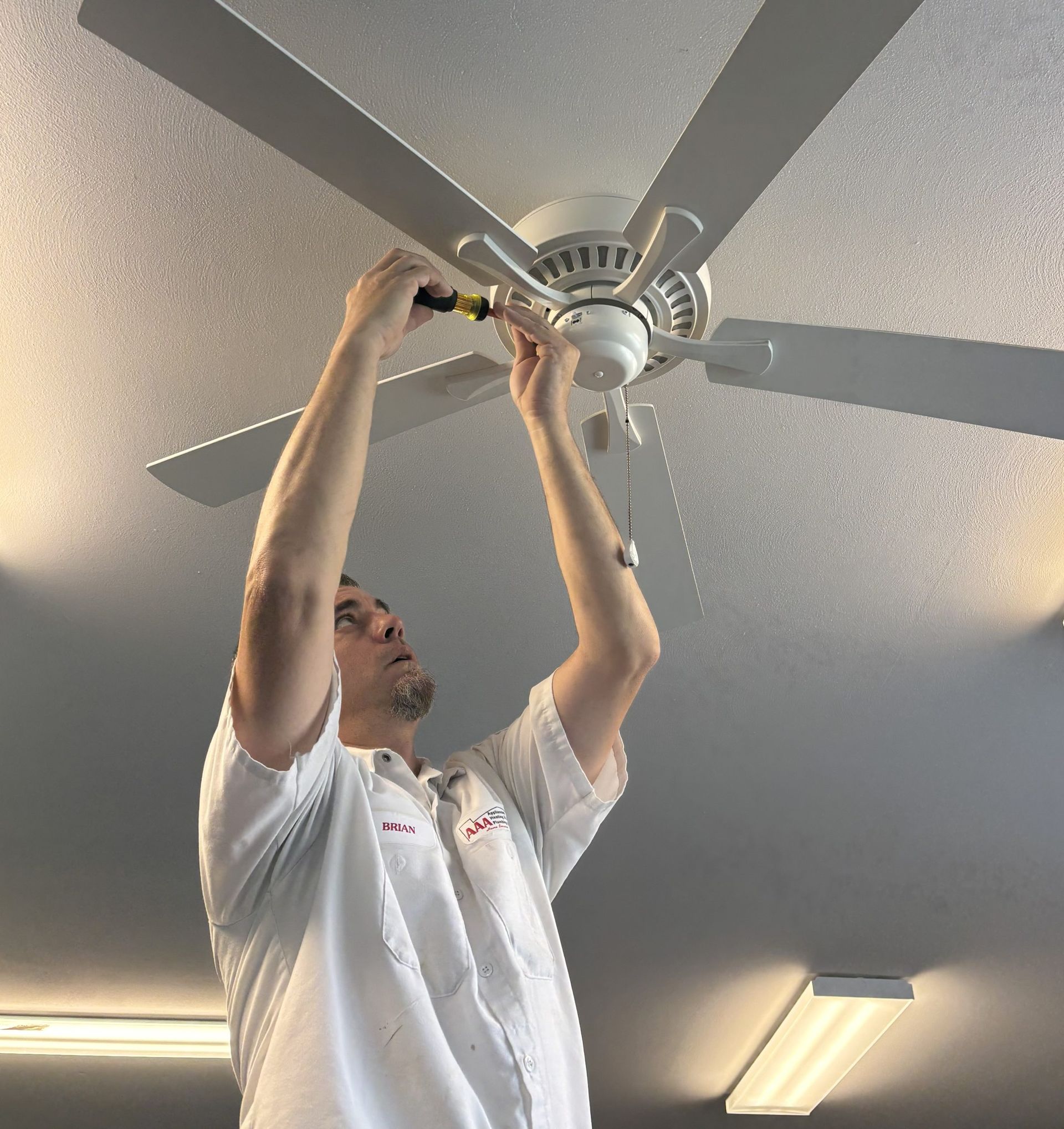
Ceiling Fan Installation and Replacement
This one trips up a lot of DIYers. Ceiling fans are heavier than standard light fixtures and require a fan-rated electrical box to support the weight and movement. If a fan was installed on a standard light fixture box, it's unsupported — and the wobble you feel is the box flexing. Installation also involves wiring for the motor and light separately, which gets complicated when the existing wiring doesn't account for it.
Switch Replacement and Dimmer Upgrades
A switch that sparks when operated, doesn't click cleanly, or feels hot needs to be replaced. Dimmer switch installations require matching the dimmer to the type of bulb (standard dimmers and LED-compatible dimmers are different), and some three-way switch configurations require specific dimmer models. Getting this wrong results in buzzing, flickering, or a dimmer that simply doesn't work.
Safety Inspections
If you've moved into an older home, if you've been adding devices and appliances without knowing the load capacity of your circuits, or if you've had flickering lights or breakers that trip for no obvious reason — a safety inspection by a licensed electrician gives you a baseline. It's not a warranty, but it tells you what you're working with.
The DIY Question
YouTube has made a lot of electrical work look approachable, and some of it genuinely is — replacing a like-for-like outlet with the power off is something a careful homeowner can do. But the line between "I can do this" and "I'm creating a hazard" is not always obvious when you're in the middle of it.
The risks aren't only to you. Improper electrical work is a leading reason homeowner's insurance claims get disputed. If a fire starts in a wall and the origin is traced to work that wasn't permitted or wasn't done correctly, your coverage may not apply. That's a consequence that outlasts the job by years.
For anything beyond swapping a like-for-like outlet or fixture, the safer call is a licensed electrician. The AAA electrical team handles residential work across the O'Fallon area — small jobs included, not just the large ones.
Bundling Small Jobs Saves Money
One practical note: if you have a list of small electrical items — an outlet here, a switch there, a ceiling fan box that needs to be upgraded — it's more cost-effective to schedule them together than to call separately for each one. The trip charge is the same either way; the incremental cost of additional work during the same visit is much lower.
Make a list of every electrical item in your home that you've noticed and mentally filed away. Then call and go through the list. Our team serves O'Fallon and the surrounding St. Charles County area — reach us at (636) 397-3200 or schedule online.
AAA technicians do not work on commission, so there's no incentive to pad a job list or recommend work that isn't needed. You'll hear what actually needs attention.
Frequently Asked Questions
Do I need a permit for small electrical work in O'Fallon?
It depends on the scope. Replacing a like-for-like outlet or switch typically doesn't require a permit in most Missouri jurisdictions. Installing new circuits, moving outlets, or upgrading a panel does. A licensed electrician will know what requires a permit in your specific municipality and will pull one when needed — that's part of the job.
How do I know if an outlet needs to be replaced?
Signs include plugs that feel loose or fall out on their own, visible discoloration or scorch marks around the face plate, warmth on the outlet itself, outlets that spark when you plug something in, or intermittent power. Any of these is a reason to have the outlet replaced.
What's the difference between a GFCI outlet and a regular outlet?
A GFCI outlet monitors electrical current and trips (shuts off) in milliseconds if it detects an imbalance — the kind caused by current flowing through a person. In wet areas like bathrooms, kitchens, and garages, this protection can prevent electrocution. They're identifiable by the TEST and RESET buttons on the face.
Can I install a ceiling fan where there's currently a light fixture?
You can, but the existing electrical box must be fan-rated. Standard light fixture boxes aren't designed to support the weight and movement of a ceiling fan. An electrician will verify whether the box needs to be replaced before mounting the fan — this is one of the most common oversights in DIY fan installations.
What causes a circuit breaker to keep tripping?
A breaker that trips repeatedly is either overloaded (too many devices drawing power from the same circuit), has a short circuit somewhere in the wiring, or is faulty itself. Repeatedly resetting a breaker without finding the cause is not a solution — the breaker is doing its job by tripping, and ignoring the underlying issue creates a fire risk.
How much does it cost to have an electrician replace outlets or switches?
Individual outlet or switch replacements are typically modest in cost — the work itself is straightforward. Costs vary by the number of items, accessibility, and whether any additional work is needed (like installing a new box or running wire). Bundling several small jobs into a single service call is always more economical than scheduling each one separately.