

Your Heat Pump Has Two Jobs. Here's How to Tell If It Can Handle Both This Winter.
Your Heat Pump Has Two Jobs. Here's How to Tell If It Can Handle Both This Winter.
Most homeowners in St. Charles County bought a heat pump because someone told them it was efficient. And it is — for about nine months of the year. What nobody always explains is what happens in January when the temperature drops to 15°F and your heat pump is supposed to keep a 2,200 square foot house at 70 degrees.
That's when the second job kicks in. And that's when a heat pump that's been slowly slipping shows you exactly where it stands.
A Heat Pump Does Two Things — and One Is Harder Than the Other
In the summer, a heat pump works like a standard air conditioner: it pulls heat out of your home and dumps it outside. That's relatively easy work. There's plenty of heat to move.
In the winter, the process reverses. The heat pump extracts heat from outdoor air — even cold air — and moves it inside. This sounds counterintuitive, but air at 35°F still holds usable heat energy. The system compresses refrigerant to concentrate that energy and deliver it indoors.
Here's the catch: as outdoor temperatures fall, there's less heat available to extract. The system works harder for a smaller return. Most heat pumps have a rated efficiency (called COP, or Coefficient of Performance) that drops noticeably below 35–40°F. Below 25°F, many systems struggle to keep up without help from a backup heat strip.
Missouri winters test this design regularly. St. Charles County averages lows in the mid-20s in January and February, with cold snaps that push well below zero. A heat pump that's running fine in September might be quietly losing ground by February — and you won't realize it until your backup heat is carrying most of the load and your utility bill reflects it.
Signs Your Heat Pump Is Losing the Battle
It runs constantly without reaching the set temperature
A heat pump cycles on and off throughout the day. If yours is running for three or four hours straight and the house still feels cold, the system isn't keeping pace. This can mean a refrigerant issue, a failing compressor, or a heat exchanger problem — all of which get worse in cold weather.
Ice is building up on the outdoor unit
A thin layer of frost on the coil during winter is normal. Heat pumps have a defrost mode that clears it. But if you're seeing a thick crust of ice that doesn't clear, or ice forming on the fan blades or housing, the defrost cycle isn't working correctly. Operating with ice buildup puts serious stress on the compressor.
Your heating bills jumped without a cold snap explaining it
When a heat pump can't keep up, the backup electric resistance strips carry more of the load. Those strips are cheap to install and expensive to run — roughly three times the cost of heat pump operation per unit of heat delivered. A sudden spike in your Ameren bill in mid-winter is often the first sign something is wrong with the primary system.
Unusual sounds from the indoor or outdoor unit
Grinding, rattling, or a high-pitched squeal from the outdoor unit usually points to a bearing or fan motor problem. A gurgling or hissing sound from the indoor air handler can indicate refrigerant issues. Neither gets better as temperatures drop.
The system switches to emergency heat on its own
If your thermostat shows "Emergency Heat" without you selecting it, the system detected a problem with the heat pump and failsafed to backup heat. This is worth addressing before the system fails entirely on a cold night.
What Missouri Winters Ask of a Heat Pump
Most heat pump marketing was developed with mild climates in mind. A unit that performs well in Georgia winters is going to work harder here. St. Charles County homeowners are in a climate zone that pushes heat pumps toward their operational limits on a regular basis — which makes annual maintenance less optional than it might seem.
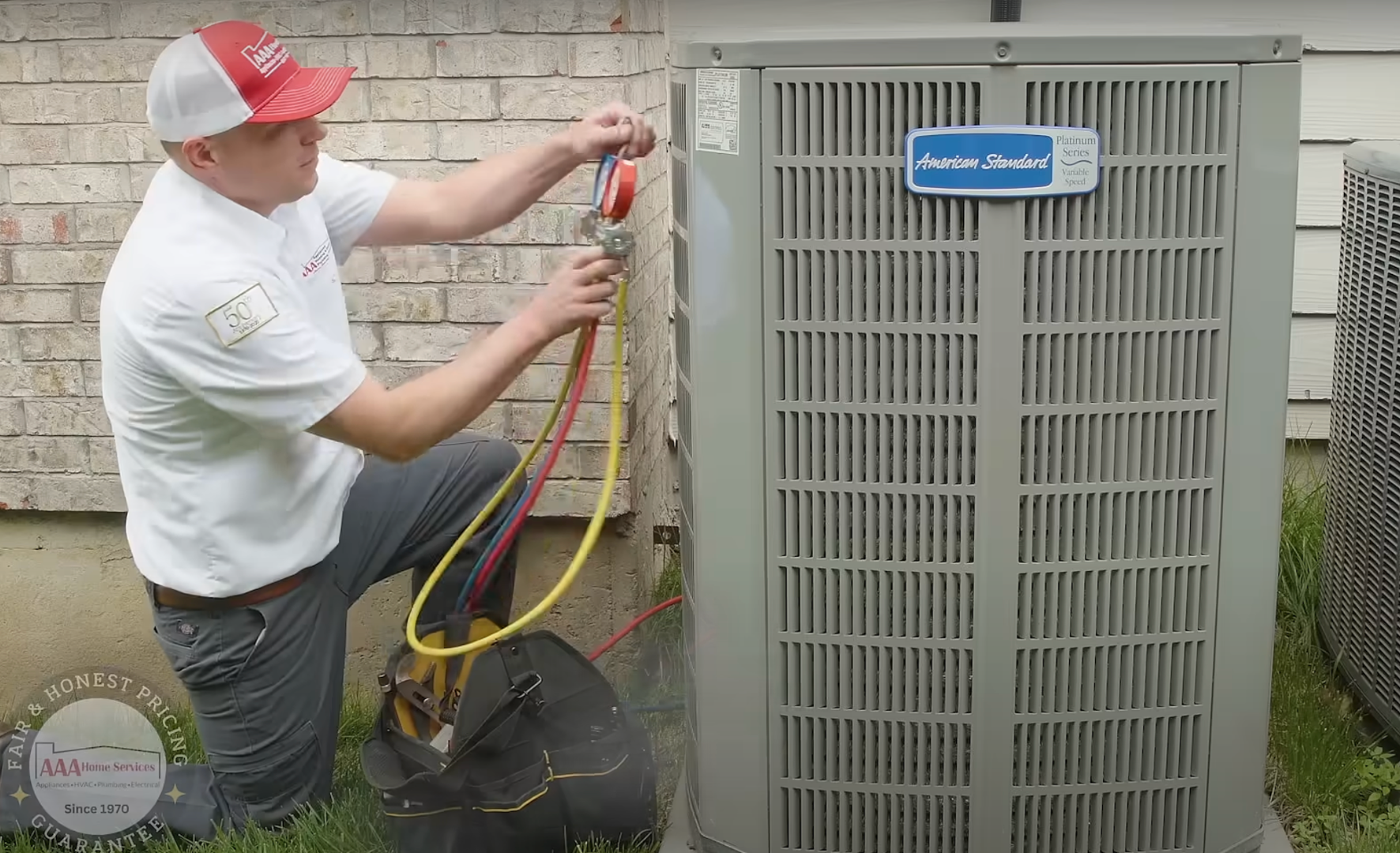
A fall tune-up typically includes checking refrigerant charge, testing the defrost board and sensors, inspecting electrical connections, verifying backup heat operation, and cleaning the outdoor coil. Any of those items being off by a margin will multiply the problem once temperatures drop.
For homeowners who haven't had a heating system check since last spring, now is the right window. Once you're heating the house, any service requires more time and creates more disruption than catching the problem in September or early October.
If you're noticing any of the warning signs above, or if your system is more than 10 years old, a diagnostic visit is worth scheduling before the first freeze. The AAA team handles heating and cooling service across St. Charles County, and our technicians do not work on commission — their job is to tell you what's actually happening with the system, not to sell you something you don't need.
You can reach us at (636) 397-3200 or schedule online through our contact page. If you're in the St. Charles area, we have a dedicated St. Charles service page with local scheduling information.
Frequently Asked Questions
At what outdoor temperature does a heat pump stop working efficiently?
Most standard heat pumps start losing significant efficiency below 35–40°F. Below 25°F, many systems can't meet the full heating load without backup assistance. Cold-climate heat pumps (sometimes called "hyper heat" or inverter-drive units) can maintain better performance down to 0°F or below, but these are still less common in existing St. Charles County homes.
Should my heat pump be running in defrost mode often?
Short defrost cycles — typically 5 to 10 minutes every 30 to 90 minutes during cold weather — are normal. If your system is going into defrost very frequently, running defrost for long periods, or failing to clear ice, that's a sign the defrost board, sensor, or refrigerant charge needs attention.
How do I know if my backup heat strips are working?
During a maintenance visit, a technician can verify backup heat operation with a simple test. You can also check by setting your thermostat to Emergency Heat mode and confirming the house warms. If it doesn't, the strips or their circuit may have a problem. Emergency Heat should not be your everyday heating mode — it's significantly more expensive to operate than the heat pump itself.
Can a heat pump handle Missouri winters without a gas backup?
Yes, with the right setup. An all-electric heat pump system with properly sized backup heat strips can handle Missouri winters. Many homes in St. Charles County use this setup successfully. The key factors are system sizing, insulation quality, and whether the heat pump itself is in good working order. A system that's undersized or has refrigerant issues will lean heavily on backup heat and drive up utility costs.
My heat pump is 12 years old. Should I repair or replace it?
Age alone isn't the deciding factor. A 12-year-old system in good mechanical condition with no major failures can often run another 3–5 years with maintenance. The repair-vs-replace calculation depends on what's failing, what it costs to fix, and what efficiency you'd gain from a new system. A diagnostic visit gives you actual data to make that decision — rather than guessing based on age alone.
What should a heat pump tune-up include?
A thorough fall tune-up should cover: refrigerant pressure check, defrost board and sensor test, outdoor coil cleaning, electrical connection inspection, capacitor test, air filter check or replacement, backup heat verification, and a review of thermostat settings and operation. If a contractor offers a tune-up that skips the defrost system and refrigerant check, ask why.