
Water Softener Overflow Drain Troubleshooting Guide
Understanding Water Softener Overflow Drain Issues
A water softener overflow drain is a critical safety component that prevents costly water damage when your system malfunctions. Here’s what you need to know about overflow drain problems:
Common Overflow Drain Issues:
- Stuck float valve – prevents proper water level control
- Clogged drain line – blocks waste water discharge during regeneration
- Faulty injector – disrupts the brine draw process
- Salt bridges – create blockages in the brine tank
- Incorrect settings – cause continuous regeneration cycles
Quick Solutions:
- Check if float moves freely in brine tank
- Inspect drain hose for kinks or clogs
- Verify regeneration timer settings
- Look for salt crust buildup around connections
Most water softener overflow issues stem from mechanical failures rather than electrical problems. A stuck regeneration cycle can waste up to 50 gallons of water per cycle, potentially adding hundreds of gallons to your monthly water bill if left unchecked.
When your water softener overflow drain starts acting up, you’ll typically notice puddles around the unit, salt crystallization near drain connections, or unusually high water bills. These warning signs indicate that components like the float valve, injector, or drain line need professional attention.
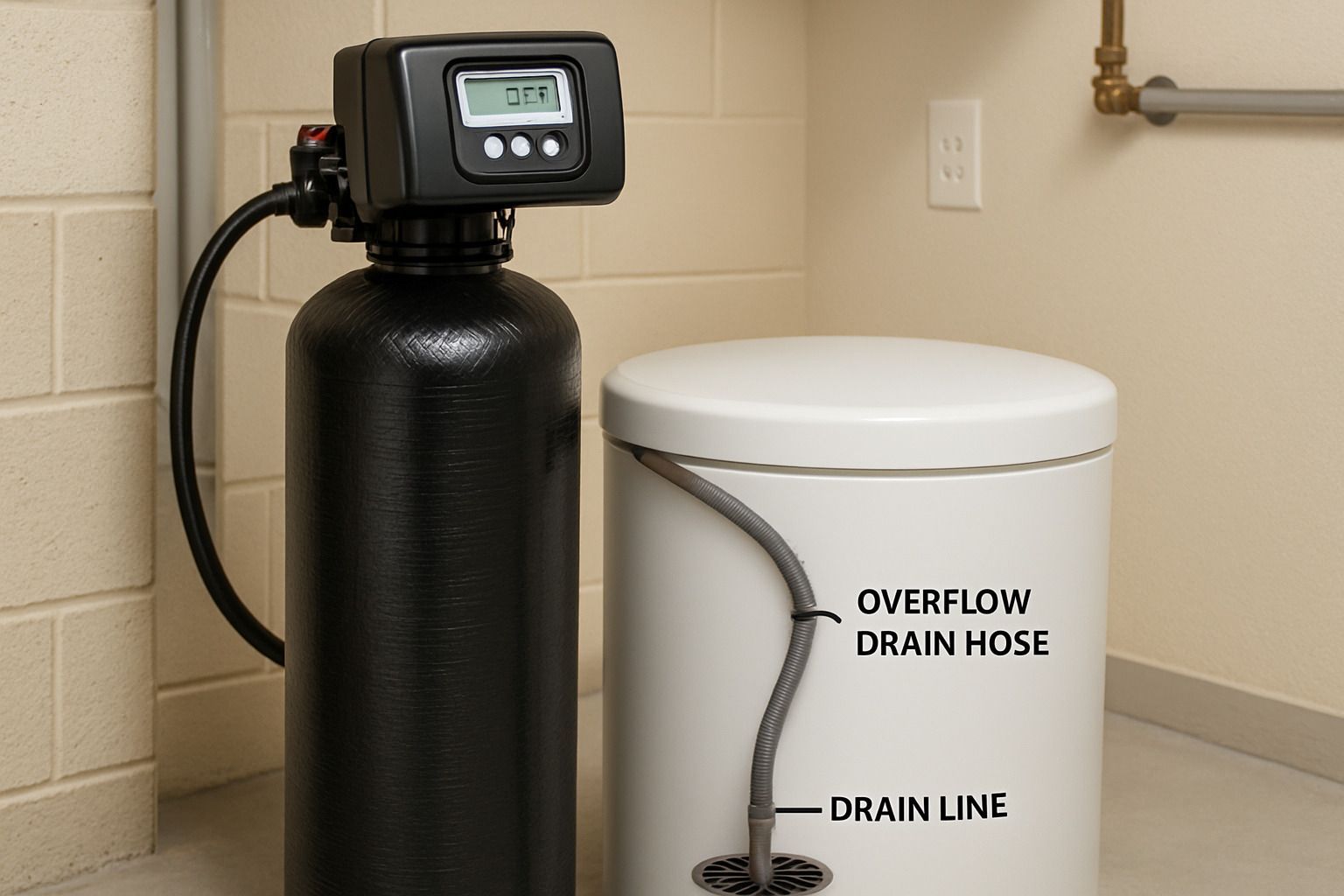
The overflow drain system includes two separate discharge lines: the main drain line that handles regular regeneration waste, and the overflow drain that only activates during system failures. Understanding this distinction helps identify whether you’re dealing with normal operation or a malfunction requiring immediate repair.
I’m Dan Walsh, and I’ve spent years managing home repair services and helping homeowners resolve water softener overflow drain problems throughout the Greater St. Louis area. My experience with technician teams has shown me that most overflow issues can be prevented with proper maintenance and prompt professional service when warning signs appear.

Anatomy of a Water Softener Overflow Drain
The water softener overflow drain system includes several key parts: the brine tank itself, a safety float that monitors water levels, the main drain line that handles regular wastewater, an overflow hose for emergencies, and proper air gap venting to prevent contamination.
Understanding how these components interact helps you spot problems before they become expensive headaches. The system operates on both gravity flow for the overflow drain and pressure flow for the main discharge line, which is why proper installation matters so much.
How the Parts Work Together
Your water softener’s drainage system works like a carefully choreographed dance. The float valve acts as the conductor, rising and falling with water levels in the brine tank. When water reaches the right level—usually between 8 and 14 inches—this float tells the control valve to stop filling.
If that float gets stuck or the control valve malfunctions, your water softener overflow drain kicks in as backup protection. The injector and control head handle the heavy lifting during regeneration. The injector uses water pressure to create a venturi effect that draws salty brine from the tank.
Each complete regeneration cycle typically takes between 70 and 120 minutes. During this time, your system flushes out accumulated hardness minerals—calcium and magnesium—that have been pulled from your water supply.
Main Drain Line vs Overflow Drain
Your main drain line handles the everyday work. It carries away wastewater during regular regeneration cycles, operates under pressure from the control head, and can be routed up to 8 feet above your softener unit. This line typically discharges anywhere from 40 to 150 gallons per regeneration cycle.
The overflow drain is your backup. It’s gravity-fed with no pressure assistance, which means it must discharge below the brine tank outlet level. This line only activates when something goes wrong—like a stuck float or control valve failure.
Both drain lines require a 1.5-inch air gap at their discharge point. This isn’t just a good idea—it’s required by plumbing codes to prevent contaminated water or sewer gases from backing up into your water softener system.
When AAA Home Services installs or repairs water softener systems, our experienced technicians ensure both drain lines meet local plumbing codes and provide reliable protection for your home. With over 50 years of experience serving the Greater St. Louis area, we’ve seen how proper drainage installation prevents costly water damage down the road.
Why Your Water Softener Overflow Drain Fails
After 50+ years of servicing homes throughout Greater St. Louis, we’ve learned that water softener overflow drain failures usually catch homeowners off guard. Most overflow problems develop gradually over months or even years.
According to research from the Department of Energy, mechanical failures account for nearly 90% of water softener problems. The good news is that most of these issues are preventable with proper maintenance and early intervention.
Early Warning Signs
Your water softener overflow drain system gives you plenty of warning before it fails completely. Water where it shouldn’t be is usually the first sign something’s wrong. You might notice small puddles around the base of your softener, or water stains on the concrete floor.
Salt crystallization around drain connections tells a story too. When brine solution leaks even slightly, it leaves behind white, crusty deposits. Your water bill can also tip you off to problems. A stuck regeneration cycle can waste 50 gallons of water or more each time it runs.
Performance changes are another red flag. When your dishes start showing water spots again or you notice soap scum building up in the shower, your softener might be struggling to complete its regeneration cycles properly.
Top 5 Causes of a Water Softener Overflow Drain Backup
Our technicians have diagnosed thousands of water softener overflow drain problems over the years, and the same culprits keep showing up.
Stuck float valves cause more overflow problems than anything else. Over time, mineral deposits and salt crystals build up around the float arm, preventing it from moving freely. When the float can’t rise to signal “stop filling,” water keeps pouring into the brine tank until it overflows.
Kinked and collapsed drain lines are especially common in older installations. A drain line that started at ½ inch diameter can squeeze down to almost nothing, creating a bottleneck that can’t handle the volume of water during regeneration.
Clogged injectors create a domino effect that leads to overflow. When mineral deposits block this tiny component, the system can’t pull the salt solution it needs, causing water to back up in the brine tank.
Salt bridges form when humidity causes salt pellets to stick together, creating a hard crust at the top of the brine tank. Water can’t dissolve the salt below this bridge, so the system thinks it’s out of salt and keeps trying to regenerate unsuccessfully.
Control valve malfunctions can cause the system to get stuck in regeneration mode, continuously filling and draining the brine tank. These failures can waste enormous amounts of water in a short time.
Understanding these failure patterns helps our AAA technicians quickly pinpoint the root cause of your overflow problem and get your system back to normal operation the same day.
Code-Compliant Installation & Upgrades for the Water Softener Overflow Drain
Getting your water softener overflow drain installed correctly isn’t just about making it work—it’s about keeping your family safe and meeting local plumbing codes. After helping homeowners throughout the Greater St. Louis area for over 50 years, we’ve seen what happens when installations cut corners, and it’s never pretty.
The good news is that even older homes can be upgraded to meet current safety standards without breaking the bank. Most code violations we encounter involve missing air gaps, improper venting, or drain lines that don’t meet current backflow prevention requirements.
Key Code Requirements that every installation must meet include maintaining a 1.5-inch air gap at all discharge points, proper P-trap installation on sanitary connections, and adequate venting through either roof connections or air admittance valves. The maximum lift for drain lines is typically 8 feet above the softener unit, though this varies by local jurisdiction.
When we upgrade existing systems, we often find flexible tubing that’s collapsed over time or rigid connections that violate current air gap requirements. These problems might seem minor, but they can lead to contaminated water backing up into your home’s supply lines.
Meeting Local Plumbing Code Without a Floor Drain
Many homes we service don’t have convenient floor drains near the water softener, especially in finished basements or utility rooms. Don’t worry—there are several code-compliant solutions that work beautifully.
Standpipe systems are our most popular solution for homes without floor drains. We install a dedicated 2-inch PVC standpipe with proper trap and venting, creating a safe discharge point that meets all local requirements. The system connects to your existing drain lines through the crawl space or basement, maintaining the required air gap while providing reliable drainage.
Utility sink connections work well when you have a laundry room nearby. We route the water softener overflow drain lines to discharge above the sink rim, maintaining the crucial air gap that prevents backflow contamination. This solution is often the most cost-effective for existing homes.
Sump pit integration makes sense for basement installations where a sump pump already exists. We can connect your overflow drain to discharge into the sump pit, letting the existing pump handle the water removal. This approach works especially well in areas with high water tables.
For homes in rural areas, dry well installations provide an excellent solution where local codes permit. A properly sized gravel-filled dry well allows safe ground discharge without connecting to municipal sewer systems.
Retrofitting an Air Gap Fitting
The air gap fitting might be the most important safety feature you’ve never heard of. This simple device creates a physical barrier between your water softener overflow drain discharge and the receiving drain, preventing contaminated water from backing up into your home’s water supply.
When we retrofit air gap fittings, we start by cutting the existing drain line and installing a PVC adapter with the proper standoff height. The softener discharge hose sits above this fitting, creating an air space that prevents backflow while allowing proper drainage.
This upgrade protects your family’s health by stopping sewer gases and contaminated water from entering your softener system. Without this protection, a backed-up sewer line could contaminate your entire home’s water supply—something we’ve unfortunately seen happen in homes with improper installations.
Our certified technicians ensure every installation meets local plumbing codes and provides long-term reliability. You can learn more about our comprehensive Water Softener Installation Service and get your system upgraded to current safety standards.
Troubleshooting a Residential Water Softener Overflow Drain
When your water softener overflow drain starts acting up, some basic detective work can help you identify what’s going wrong before our technicians arrive. This helps us prepare the right parts and tools, making your service call more efficient.
Step-by-Step: Clearing a Clogged Water Softener Overflow Drain
Safety comes first when dealing with any water softener overflow drain issue. Before you start investigating, locate your water softener’s bypass valve and switch it to bypass mode. This stops water from flowing into the system while you’re working.
Once you’ve isolated the system, start with the visual inspection basics . Remove the brine tank lid and take a look at the float valve—it should move freely up and down like the float in a toilet tank. If it’s stuck in one position, you’ve likely found your culprit.
Next, examine the drain hose connection where it exits your softener. Look for obvious problems like kinks, sharp bends, or areas where the hose feels collapsed. Over time, these flexible drain lines can deteriorate.
Salt bridges are another common troublemaker. Using a long-handled tool like a broom handle, gently probe the salt in your brine tank. If you hit what feels like a hard crust that won’t break easily, you’ve found a salt bridge that’s blocking proper water flow.
While you can identify these issues, we strongly recommend having our certified technicians handle the actual repairs . What looks like a simple fix can quickly turn into a bigger problem if the wrong part gets damaged or installed incorrectly.
When the Water Softener Overflow Drain Keeps Running
A water softener overflow drain that won’t stop running is wasting water and potentially flooding your basement. This usually means your system is stuck in regeneration mode, which can waste hundreds of gallons if not addressed quickly.
Immediate action involves switching to bypass mode to stop the water flow, then checking your control panel for any error codes or flashing lights. However, don’t try to reprogram the system yourself—incorrect settings can damage the resin bed or control valve.
Time to Call a Certified Technician
While basic troubleshooting helps identify obvious problems, most water softener overflow drain repairs require professional expertise and specialized tools. Our certified technicians can safely disassemble injector assemblies, replace worn seals and internal components, and reprogram control systems without risking damage to your equipment.
Professional diagnosis becomes essential when you’re dealing with internal components like pistons, spacers, or venturi nozzles. These parts work together in precise ways, and even small mistakes during repair can lead to bigger problems down the road.
For reliable service throughout the Greater St. Louis area, our team can often provide same-day or next-day service when possible. Learn more about our Plumbing Services and how we can resolve your water softener issues quickly and professionally.
You can also read more about the importance of working with a Certified Plumber to ensure your repairs meet local codes and manufacturer specifications.
Preventive Maintenance & Future-Proofing
The best way to avoid water softener overflow drain problems is to prevent them from happening in the first place. After 50+ years of serving homeowners throughout the Greater St. Louis area, we’ve learned that a little preventive care goes a long way toward keeping your system running smoothly.
Simple Habits to Protect Your Water Softener Overflow Drain
Monthly visual checks are your first line of defense against water softener overflow drain problems. Take a few minutes each month to walk around your unit and look for any puddles, water stains, or salt buildup around the connections.
Keep that drain hose unkinked and properly positioned. The hose should have a gentle curve without any sharp bends or pinch points that could restrict water flow during regeneration.
Test your float movement by gently lifting it in the brine tank. It should move freely up and down without sticking or binding. If it feels sluggish or won’t move at all, that’s a sign that salt buildup or mechanical wear is affecting its operation.
Salt quality makes a real difference in preventing problems. High-quality pellet or crystal salt dissolves cleanly and leaves fewer impurities behind. Rock salt might be cheaper, but it contains debris that can clog your injector and accelerate wear on internal components.
Monitor your water bills for sudden increases. If your system starts regenerating too frequently due to a malfunction, you’ll see it reflected in higher water usage.
Upgrades That Reduce Overflow Risk
Demand-initiated regeneration systems are a smart upgrade if you’re still using an older timer-based unit. These modern systems only regenerate when you’ve actually used enough water to exhaust the resin bed.
Rigid drain line plumbing eliminates one of the most common failure points we see. Flexible hoses can collapse, kink, or deteriorate over time, while properly installed rigid piping can last decades without issues.
Remote leak detection alarms provide peace of mind, especially if your water softener is located in a finished basement or area where water damage would be costly.
Professional service scheduling every 2-3 years allows our certified technicians to catch small issues before they turn into major repairs. During these visits, we clean the injector, check all seals and gaskets, test the control valve operation, and verify that your water softener overflow drain system is functioning properly.
According to research from the Department of Energy, properly maintained water softeners can operate reliably for 15-20 years, while neglected systems often fail within 8-10 years.
We’ve also found that homes with well water or high iron content need more frequent attention. The extra minerals and sediment in well water can accelerate component wear and increase the likelihood of clogs in your drain system.
For comprehensive maintenance and upgrades that keep your system running smoothly, our team can often provide same-day or next-day service when you need it most. Learn more about our water softener installation and repair services and how we can help protect your home from hard water damage.
Frequently Asked Questions about Water Softener Overflow Drains
How high can I run the drain hose before it loses flow?
This is one of the most common questions we hear from homeowners, and the answer depends on which drain line you’re talking about. The main drain line from your softener’s control head can typically be routed up to 8 feet above the unit because it operates under pressure during regeneration cycles.
However, your water softener overflow drain works completely differently. Since it’s gravity-fed and only activates during emergencies, it must discharge below the brine tank outlet level. This means you cannot route overflow drains uphill or to liftd discharge points like you can with the main drain line.
Our technicians often find that homeowners have tried to run both lines to the same high discharge point, which can cause the overflow system to fail when it’s needed most. The overflow drain needs a clear, downward path to function properly as your safety backup.
Does every installation need an air gap and P-trap?
Absolutely—and this isn’t just a recommendation, it’s required by plumbing codes for good reason. Every water softener overflow drain installation must include a 1.5-inch air gap at the discharge point to prevent backflow contamination of your home’s water supply.
The air gap creates a physical separation between your softener’s discharge and the receiving drain. Without it, contaminated water or sewer gases could potentially flow back into your system and contaminate your entire home’s water supply.
If your system connects to a sanitary sewer line, you’ll also need a P-trap to prevent sewer gases from entering your home through the drain lines. These aren’t optional features—they’re essential safety requirements that protect your family’s health.
We’ve seen too many older installations that lack proper air gaps, and retrofitting them is always more expensive than doing it right the first time. When we install or upgrade systems, we always ensure full code compliance for your safety and peace of mind.
Can overflow water safely enter a septic system?
While it’s technically possible to discharge softener backwash into a septic system, it’s not ideal for most homes. The high sodium content in the discharge water can kill the beneficial bacteria that your septic tank needs to function properly.
Additionally, the calcium and magnesium deposits removed during regeneration can accumulate in your drain field over time, potentially causing expensive clogs and system failures. A typical regeneration cycle can discharge 40-150 gallons of mineral-rich water, which is a significant load for most residential septic systems.
If septic discharge is your only option, we often recommend installing a separate dry well or drainage field specifically for softener waste. This protects your septic system while still providing proper drainage for your water softener overflow drain system.
Our technicians have helped many rural homeowners in Warren County and St. Charles County develop alternative drainage solutions that protect both their water softeners and septic systems. Each situation is unique, so we evaluate your specific property and local regulations to find the best solution.
Conclusion
When your water softener overflow drain starts acting up, you’re not just dealing with a minor inconvenience—you’re facing potential water damage and the return of hard water problems throughout your home. The good news is that most overflow drain issues can be resolved quickly when you work with experienced professionals who understand these systems inside and out.
At AAA Home Services, we’ve been helping families throughout the Greater St. Louis area tackle water softener problems for over 50 years. Our certified technicians have seen it all, from simple stuck float valves to complex control valve failures. We know that a malfunctioning water softener overflow drain can turn a peaceful evening into a stressful situation, especially when you find puddles in your basement or notice your water bill climbing unexpectedly.
What sets our approach apart is our commitment to diagnosing the root cause rather than just treating symptoms. When we service your water softener, we don’t just fix the immediate problem—we inspect the entire system to prevent future issues. This thorough approach has earned us over 8,000 Google reviews from satisfied customers who appreciate our honest, straightforward service.
Whether you’re dealing with continuous drainage, mysterious water stains, or a system that seems to regenerate constantly, our team can often provide same-day or next-day service to get your water softener overflow drain back to normal operation. We serve St. Charles, O’Fallon, Lake St. Louis, Warrenton, Wentzville, Cottleville, Chesterfield, Ballwin, Ellisville, and surrounding communities with the kind of reliable service that keeps families comfortable and their homes protected.
Don’t let a problematic overflow drain lead to costly water damage or force your family to deal with hard water again. The longer you wait, the more complex and expensive the repair can become. Our experienced technicians can quickly identify whether you’re dealing with a simple clog or a more serious control valve issue that needs immediate attention.
For comprehensive water softener services that you can trust, visit our water softener installation & repair services page to learn more about how we can help keep your system running smoothly for years to come.
The post Water Softener Overflow Drain Troubleshooting Guide appeared first on AAA Home Services.