
Your Guide to a Cold Shower Crisis
When your electric water heater not heating , the most common causes are a tripped circuit breaker, a faulty thermostat or high-temperature limit switch, or a burned-out heating element. Here’s what to check first:
Quick Troubleshooting Steps:
- Check your circuit breaker – Reset it if tripped
- Press the reset button on the high-temperature limit switch (upper thermostat)
- Test for power at the electrical panel
- Call a professional if these steps don’t restore hot water
Nothing ruins your morning routine faster than turning on the shower and getting hit with ice-cold water. It’s frustrating, inconvenient, and leaves you scrambling for solutions. The good news is that most cases of an electric water heater not heating have identifiable causes—and many can be diagnosed quickly.
Electric water heaters rely on a few key components working together: heating elements that warm the water, thermostats that control temperature, and safety switches that prevent overheating. When any of these fail, your hot water supply disappears. Understanding what’s going wrong is the first step to getting your hot water back.
As Dan Walsh, I’ve managed home repair services for decades and have helped countless St. Louis area homeowners troubleshoot and resolve issues with their electric water heater not heating . At AAA Home Services, we see these problems regularly and know exactly how to diagnose and fix them efficiently.
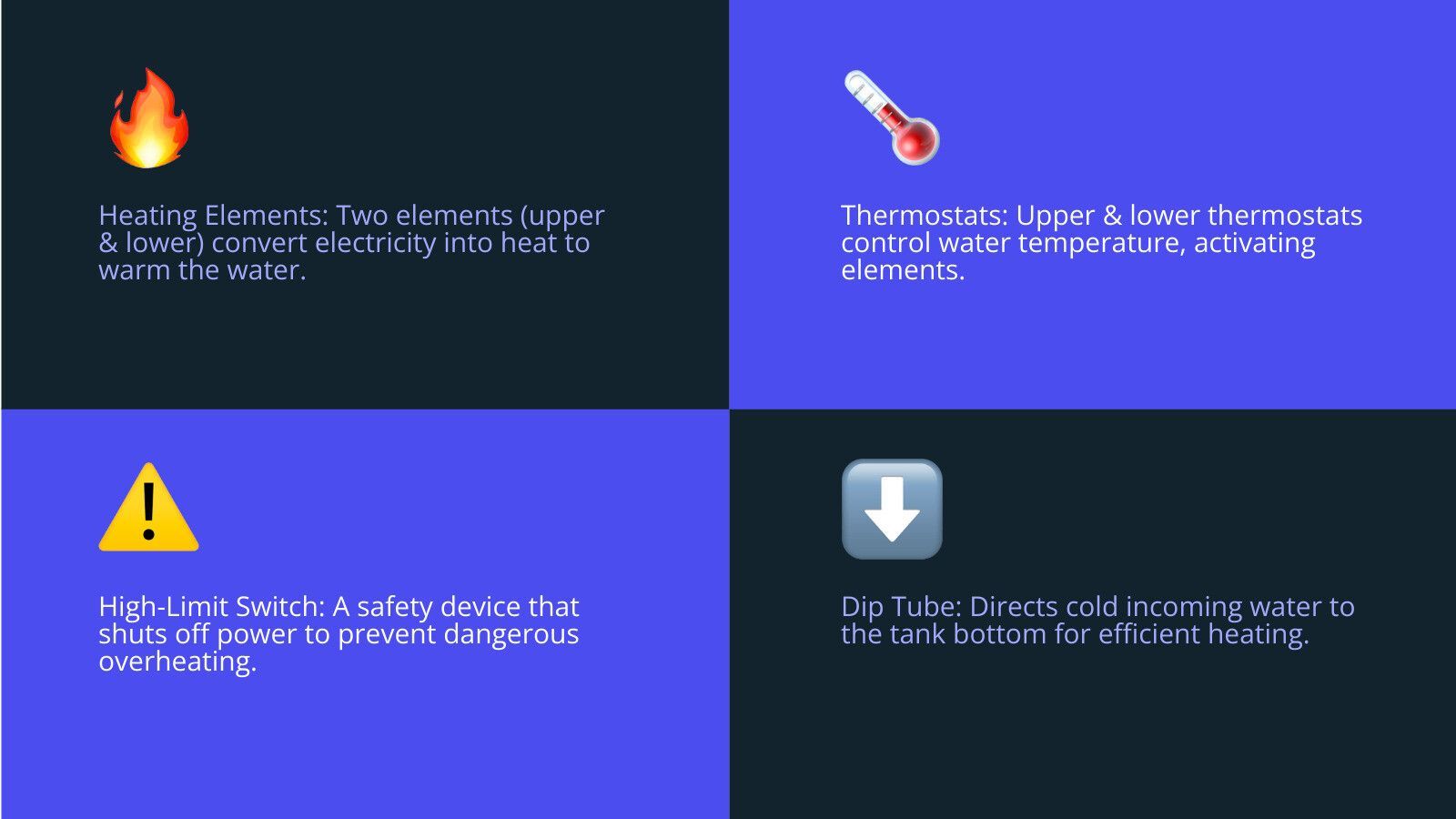
Quick electric water heater not heating definitions:
Common Reasons Your Electric Water Heater is Not Heating
When you’re left shivering under a cold shower, your electric water heater not heating is usually the result of a handful of common problems. Let’s walk through the most frequent culprits—from simple power interruptions to more complex internal failures—so you’ll understand what might be happening inside that tank.
Power Supply Problems: The First Place to Check
Before you start worrying about expensive repairs, let’s check the simplest solution first. Your electric water heater not heating might just be dealing with a power supply issue. Electric water heaters need a dedicated 240-volt circuit to operate, and sometimes that connection gets interrupted.
The first suspect? Your circuit breaker. Head to your home’s electrical panel—usually tucked away in the basement, garage, or a utility closet—and look for the breaker labeled for your water heater. It’ll typically be two switches connected together. If the breaker is sitting in the “OFF” position or hovering somewhere between “ON” and “OFF,” it’s tripped. Simply flip it all the way to “OFF” first, then firmly back to “ON.”
Now, if resetting the breaker doesn’t bring back your hot water—or worse, if it trips again right away—you’re looking at something more serious. An overloaded circuit, faulty wiring, or loose connections could be disrupting power to your water heater. In older homes with fuse boxes instead of breakers, a blown fuse serves the same protective function. If you replace a fuse and it blows again immediately, that’s your electrical system waving a red flag.
Here’s where things get serious: working with 240-volt electrical systems isn’t a DIY project. The risk of electrical shock or fire is very real. Our licensed electricians at AAA Home Services come equipped with professional tools like multimeters to safely test voltage, diagnose wiring problems, and ensure your water heater is receiving the correct power it needs.
As one satisfied customer shared: “Sam was Professional and answered all my Questions. He replaced my Thermostat and got my Furnace working again. And he seemed very knowledgeable about what he was doing. I was very Satisfied with Sam.” Our technicians like Sam bring that same expertise to electrical diagnostics, quickly identifying whether your power supply is the problem.
More info about our electrician services
Why a Faulty Thermostat or Safety Switch is a Common Cause for an Electric Water Heater Not Heating
Once you’ve ruled out power supply issues, the next likely suspects are your thermostats and safety switches. Your electric water heater has two thermostats—an upper and a lower one—that work together to control the heating elements and maintain your desired water temperature.
The most important safety feature is the high-temperature limit switch, typically located on the upper thermostat. Think of it as your water heater’s emergency brake. When water temperature climbs above 180°F, this switch automatically cuts power to prevent overheating and potential scalding. Look for a small red reset button on the upper thermostat. If it’s popped out, press it firmly to reset it.
If pressing that reset button brings your hot water back, that’s good news—but keep an eye on things. That limit switch tripped for a reason. You might have a shorted heating element or a defective thermostat causing the water to overheat. If the switch keeps tripping repeatedly, sediment buildup could also be forcing your system to work harder than it should.
Faulty thermostats create temperature inconsistencies that leave you with water that’s either not hot enough or dangerously scalding. When a thermostat fails to signal the heating element to turn on, your water stays cold. When it fails to shut things off at the right temperature, you risk burns. The U.S. Department of Energy recommends setting your water heater to 120°F—hot enough for comfortable showers and clean dishes, but safe enough to prevent scalding injuries.
While resetting a limit switch is something most homeowners can handle, diagnosing and replacing faulty thermostats requires professional testing equipment and expertise. Our technicians can accurately test these components and replace them with parts that match your system’s specifications, ensuring everything operates safely.
US Department of Energy recommendations on water heater temperature
A deeper look at broken water heaters
Malfunctioning Heating Elements: The Heart of the Problem
The heating elements are where the magic happens—or doesn’t, when your electric water heater not heating . Most electric water heaters have two elements: one at the top and one at the bottom of the tank. When either or both fail, your hot water supply suffers.
The biggest enemy of heating elements is sediment buildup. Over time, minerals from your water supply settle at the bottom of your tank and coat the heating elements. This mineral scale acts like a thick blanket, preventing the elements from efficiently transferring heat to the water. The result? Lukewarm showers, water that runs cold too quickly, or strange hissing and popping sounds as the element struggles to heat through that crusty mineral layer.
Heating elements can also simply burn out. Normal wear and tear eventually takes its toll, but sometimes elements fail prematurely. One common culprit is “dry fire”—when power gets turned on before the tank is completely full of water. Without water surrounding it, the element overheats and burns out almost instantly.
Signs your heating elements are failing include having no hot water at all when both elements quit, getting only lukewarm water when one element fails, or hearing those telltale crackling and popping noises from your tank. While replacing a heating element might sound straightforward, it involves draining the entire tank, working with electrical connections, and ensuring watertight seals when you’re done. We recommend letting our qualified technicians handle this repair to ensure it’s done safely and correctly.
Regular maintenance makes a huge difference. Flushing your water heater tank annually removes sediment before it can build up on your elements, extending their lifespan and keeping your water hot.
The importance of water heater maintenance
Internal Component Failures That Stop the Heat
Sometimes the problem hiding inside your tank is less obvious than a burned-out heating element. Two critical internal components that can cause an electric water heater not heating properly are the dip tube and the control board.
The dip tube is a long plastic pipe that runs from your cold water inlet down to near the bottom of the tank. Its job is simple but crucial: directing incoming cold water to the bottom so it gets heated before rising to the hot water outlet at the top. When a dip tube breaks, cracks, or deteriorates, cold water enters and immediately mixes with the hot water at the top. You’ll get lukewarm showers and find yourself running out of hot water frustratingly fast. The heating elements are still working, but that cold water mixing at the top sabotages your hot water supply. Replacing a broken dip tube means draining the tank and fishing out the old one—not a simple weekend project.
Modern electric water heaters sometimes include a control board that acts as the unit’s brain, managing temperature regulation, power distribution, and diagnostic functions. When the control board malfunctions, it can disrupt the entire heating process, leaving you without hot water even though the heating elements themselves are fine. Control board issues require specialized diagnostic tools and knowledge to identify and repair.
Internal wiring problems beyond a simple tripped breaker can also cause mysterious heating failures. Loose connections, damaged wires, or corroded terminals can prevent power from reaching the elements or thermostats. These issues are subtle and potentially dangerous to diagnose without proper training and equipment.
For any of these internal component failures, professional diagnosis is essential. Our technicians have the expertise to pinpoint these complex problems and make the necessary repairs safely.
One customer shared their experience with our team: “Can’t say enough of how great Dan and Tim were in getting us a water heater replaced within a matter of hours. The customer service was so impressive… AAA will be my one and only source for any home appliance or home service needs from here on out.” When you’re facing complex water heater issues or need a replacement, our team responds quickly with the expertise you need.
When to Call a Professional for Your Water Heater
While basic troubleshooting like resetting a circuit breaker can help identify simple issues, there’s a critical point where attempting DIY repairs on your electric water heater not heating becomes more risky than rewarding. Understanding when to step back and call in the experts isn’t just smart—it’s essential for your safety and your wallet.
Why You Should Trust an Expert When Your Electric Water Heater is Not Heating
Let’s be honest: electric water heaters might look straightforward from the outside, but inside they’re a complex interplay of high-voltage electricity, pressurized hot water, and precision components. When these systems fail, the stakes are high. Safety risks top the list of reasons to call a professional. Your electric water heater operates on 240 volts—enough power to cause severe injury or even death if handled improperly. Beyond electrical shock, you’re dealing with a tank holding dozens of gallons of scalding water under pressure. One wrong move can lead to burns, flooding, or significant property damage.
Professional technicians bring the proper tools to diagnose your issue accurately. While you might own a screwdriver, our technicians arrive equipped with specialized multimeters, circuit testers, and diagnostic equipment that can pinpoint whether you’re dealing with a faulty heating element, a malfunctioning thermostat, wiring problems, or a failing control board. This precision matters because accurate diagnosis is the difference between a repair that lasts and one that leaves you back in cold water within weeks.
When our technicians perform repairs, they’re not just swapping out parts—they’re ensuring lasting repairs that meet industry standards and local codes. They use quality replacement components matched to your specific unit’s requirements. They know that an electric water heater should last between 10 to 15 years with proper care, and their work is designed to help your unit reach or exceed that lifespan. Compare that to a DIY attempt with the wrong part or improper installation, and the value becomes clear.
There’s another benefit that homeowners often overlook: preventative insight. When a technician services your water heater, they’re not just fixing today’s problem. They’re identifying tomorrow’s potential issues before they become emergencies. They might notice sediment buildup that needs flushing, an anode rod that’s nearing the end of its useful life, or loose electrical connections that could fail soon. This preventative perspective can save you from future breakdowns and extend your water heater’s operational life significantly.
At AAA Home Services, we’ve been serving homeowners in the Greater St. Louis, St. Charles, and Warren County area for over 50 years. That’s five decades of building trust, one water heater repair at a time. Our technicians have seen every possible scenario with electric water heaters not heating , from simple thermostat resets to complex wiring failures. This experience translates directly into faster, more accurate service for you.
“We have had great experiences with AAA service people over many years. It’s so nice to know who to call when I have a problem. Thanks for the good work!! AAA Heating & Cooling Customer” – This sentiment captures what we strive for: being the reliable partner you can count on when things go wrong.
The peace of mind that comes with professional service is genuinely invaluable. You’re not lying awake wondering if you tightened that electrical connection properly or whether that heating element is seated correctly. You know your system was serviced by qualified experts who stand behind their work. You can trust that your water heater is operating safely and efficiently, ready to provide consistent hot water for your family’s daily needs.
If you’ve reset your breaker and pressed the high-temperature limit switch reset button without success, or if your water heater keeps having the same problem repeatedly, those are clear signals to call us. We can often provide Same Day or Next Day service to restore your hot water quickly. Our service call fee is just $95, lower than most home service companies, and it’s a small investment for the expertise and safety you receive.
Don’t let a cold shower crisis drag on longer than necessary. Our team is ready to diagnose and repair your electric water heater not heating with the professionalism and care that’s earned us over 8,000 Google reviews and made us a trusted name in home services for more than half a century.
Schedule your water heater repair service today
The post Why Your Electric Water Heater Isn’t Heating: Simple Solutions appeared first on AAA Home Services.